
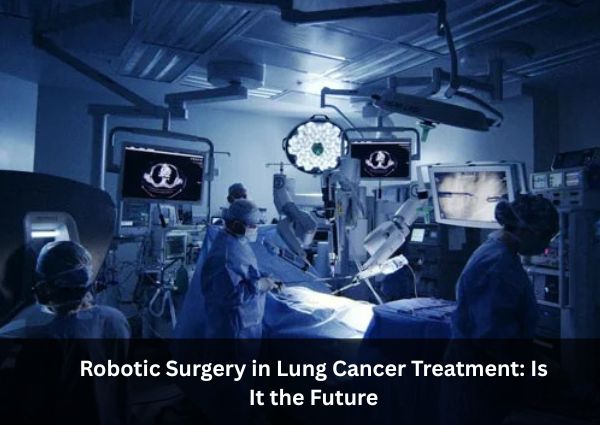
Lung cancer remains one of the most challenging cancers to treat due to its complex nature, late detection, and proximity to vital organs. Over the last decade, rapid advancements in medical technology have opened new doors for safer, more precise, and minimally invasive treatment approaches. Among these innovations, robotic surgery has emerged as a game-changing option. Many leading cancer centers are now embracing robotic-assisted procedures, and the question arises: Is robotic surgery the future of lung cancer treatment? Let’s explore this transformative technology in detail.
Enhanced Precision and Minimally Invasive Procedures
Traditional lung cancer surgeries often require large incisions, which can lead to significant pain, longer hospital stays, and extended recovery periods. Robotic-assisted surgery changes this entirely. Using small incisions and highly advanced robotic arms controlled by skilled surgeons, the procedure offers unmatched precision.
The system provides surgeons with a three-dimensional, high-definition view of the surgical site, allowing them to operate with greater accuracy than possible with the human hand alone.
Robotic arms mimic human wrist movement but with enhanced flexibility and superior steadiness, reducing the risk of accidental tissue damage. For lung cancer patients, this means safer surgeries, reduced blood loss, minimal scarring, and quicker recovery. Many patients are able to return to normal activities sooner compared to traditional open surgeries.
Better Treatment Outcomes and Reduced Complications
One of the primary goals of cancer surgery is the complete removal of tumors while preserving as much healthy lung tissue as possible. Robotic surgery improves the chances of achieving this delicate balance.
Data from various clinical studies suggest that robotic-assisted lung cancer procedures lead to fewer complications, reduced postoperative pain, and lower risk of infections.
Because of enhanced visualization, surgeons can identify lymph nodes and tumor margins more clearly, ensuring more accurate removal and reducing the chances of cancer recurrence.
Additionally, robotic technology allows surgeons to perform complex reconstructions and delicate dissections that are difficult with conventional methods. Patients with early-stage lung cancer, in particular, benefit immensely from robotic surgery, as it often leads to better long-term outcomes and improved lung function post-surgery.
The Future of Lung Cancer Care: Technology and Expertise Combined
While robotic surgery offers numerous advantages, its success depends heavily on the expertise of the surgical team. The technology itself is only a tool—the real skill lies in the hands of trained and experienced robotic surgeons. As more cancer institutes invest in robotic platforms and surgical teams receive specialized training, the availability and success of robotic lung surgeries continue to grow.
Looking ahead, the integration of AI and advanced imaging tools with robotic systems promises even greater advancements. Future robotic platforms may assist surgeons in real-time decision-making, predicting tumor behavior, and enabling personalized treatment approaches. As these technologies evolve, robotic surgery could become the standard of care for lung cancer treatment worldwide.
Patients, too, are becoming more aware of the benefits of minimally invasive cancer treatment. The demand for robotic surgeries is steadily rising due to faster recovery times, shorter hospital stays, and improved quality of life after treatment.
Conclusion
Robotic surgery represents a significant leap forward in lung cancer treatment. With improved precision, fewer complications, and faster healing, it is rapidly becoming a preferred option in modern oncology. While traditional surgeries still have their place, the future of lung cancer care is clearly moving toward advanced robotic-assisted procedures.
Dr AV Cancer Institute provides the best treatment regarding this, offering state-of-the-art robotic surgery and expert oncology care to ensure safer procedures and better outcomes for lung cancer patients.