
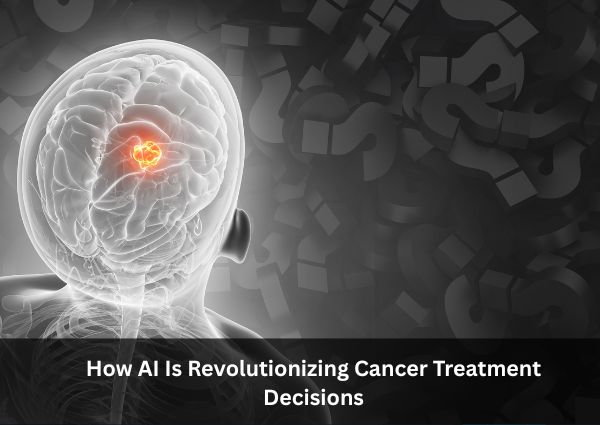
Artificial Intelligence (AI) is transforming the medical world, and one of its most significant impacts is seen in cancer diagnosis, treatment planning, and patient care. As cancer cases rise globally, the need for faster, more precise, and more personalized treatment options has become crucial. AI technologies—such as machine learning, deep learning, and predictive analytics—are now empowering doctors with tools that enhance accuracy and support better decision-making. This blog explores how AI is reshaping cancer care and improving outcomes for patients and doctors alike.
Early Detection and Accurate Diagnosis
One of the most powerful contributions of AI in oncology is early cancer detection. Traditional diagnostic methods like CT scans, MRIs, and biopsies are effective but can be time-consuming and prone to human interpretation errors. AI-powered algorithms can analyze medical images with incredible precision, identifying abnormalities that may be too subtle for the human eye. For example, AI systems can detect early-stage tumors through patterns in imaging data, improving diagnosis in breast, lung, skin, and prostate cancers.
AI-driven pathology tools also assist by rapidly interpreting biopsy results and classifying cancer types accurately. This not only speeds up the diagnostic process but also ensures that patients receive timely and appropriate treatment.
Personalized Treatment Planning Using Predictive Analytics
Cancer treatment is not one-size-fits-all. Factors like genetics, age, tumor type, and lifestyle all influence how a patient may respond to specific therapies. AI enables truly personalized care by analyzing large volumes of data from clinical research, patient histories, and genetic profiles.
Machine learning models can predict how a particular cancer will progress, how the patient may respond to chemotherapy or immunotherapy, and what combination of treatments may offer the best results.
This level of precision helps doctors choose targeted treatment plans that reduce side effects and increase effectiveness. For example, AI tools can identify which patients are likely to benefit from immunotherapy—one of the most advanced cancer treatments—without subjecting others to unnecessary risks or costs.
Improving Patient Monitoring and Reducing Treatment Errors
Once treatment begins, continuous monitoring is essential. AI helps track patient progress through wearable devices, digital health platforms, and automated reporting tools. These systems monitor vital signs, treatment responses, and potential complications in real time. If the AI detects unusual patterns—such as sudden side effects or lack of improvement—it alerts medical teams immediately.
Additionally, AI reduces the risk of medical errors during drug administration and dosage planning. Automated systems ensure that patients receive the correct treatment dose based on accurate clinical data. This improves safety and enhances the overall care experience.
In advanced cancer centers, robots and AI-driven machines are also being used for precision surgeries, increasing accuracy and reducing recovery time. This combination of human expertise and AI-powered technology ensures that treatments are both safe and highly effective.
Conclusion
AI is not replacing doctors—it is empowering them. By enhancing early detection, improving diagnostic accuracy, supporting personalized Top Cancer Treatment Plans, and ensuring continuous monitoring, AI is revolutionizing how cancer treatment decisions are made. As these technologies continue to evolve, patients will benefit from earlier interventions, fewer complications, and more successful outcomes.
Dr AV Cancer Institute provides the best treatment regarding this, combining advanced AI-supported technologies with expert oncology care for improved patient results.